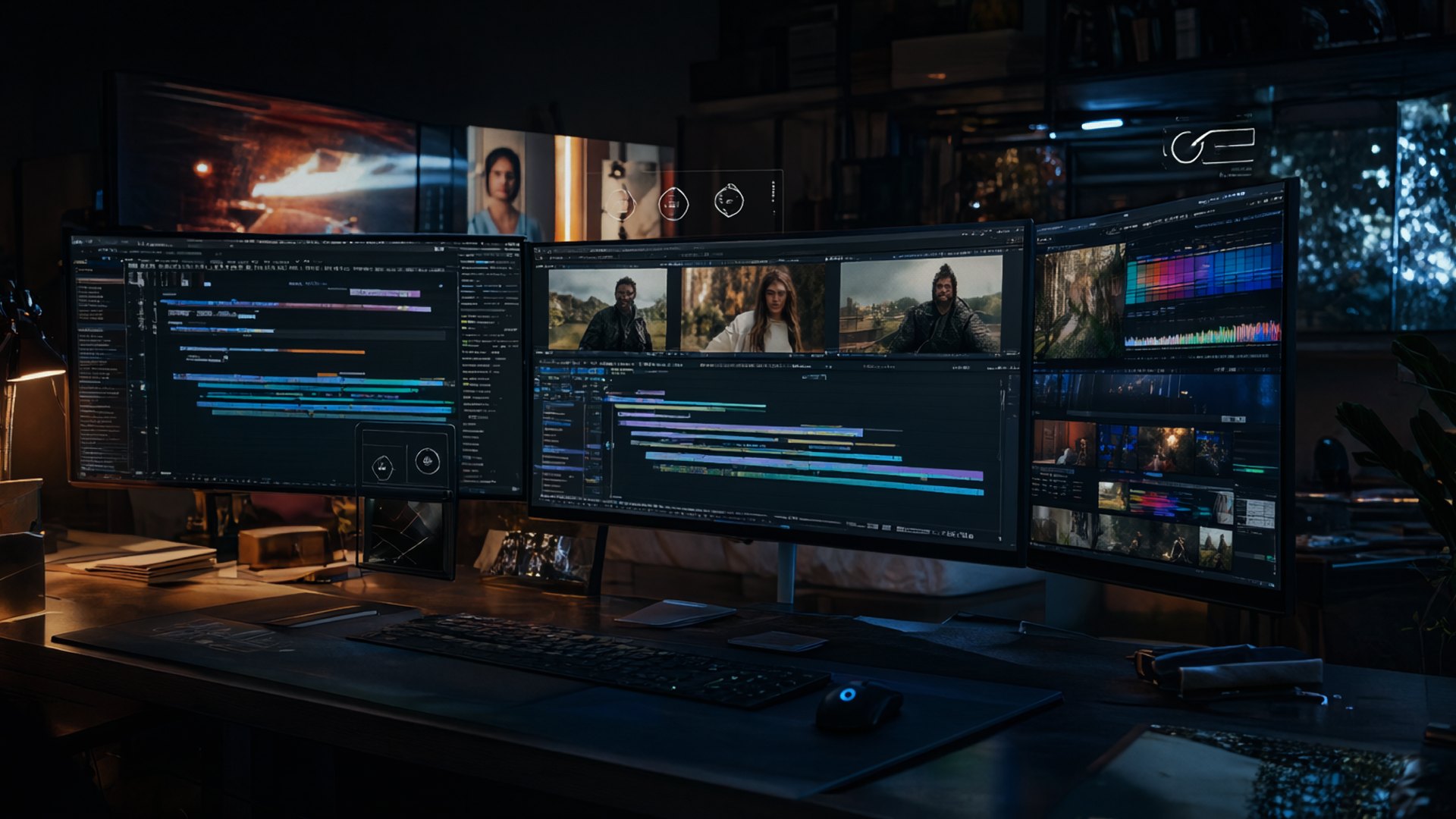
ByteDance published Seedance 2.5 on 29 October. The model generates video clips up to 30 seconds with live-synced audio in a single pass. Character consistency across the full duration is the headline improvement over earlier Seedance releases. Up to 50 reference inputs can be attached to one generation.
The release landed two days after Kling 4.0 opened its API and one day after Alibaba updated Wan 3.0. Three models now hit the same 30-second ceiling in the same week. The difference is where each one puts its effort.
What Seedance 2.5 does differently
Previous Seedance versions topped out at shorter durations and required separate audio passes. Version 2.5 generates dialogue, ambient sound, and background music natively alongside the picture. Lip sync is built in rather than bolted on. Creators testing the model report talking-head ads that hold sync across the full clip without a second tool.
The reference system is the other standout. Up to 50 inputs per generation means you can attach character sheets, location photos, style references, product images, and motion references all at once. Earlier models capped at 5 to 15 references. For branded content where a character, a product, and a setting all need to stay consistent, 50 slots removes the workaround of splitting into multiple generations and stitching.
Where it fits in the current field
We covered Kling 4.0's API launch and Wan 3.0's all-in-one endpoint earlier this week. All three now generate 30-second clips with native audio. The split:
- Kling 4.0 leads on keyframe control (up to 10) and voice-reference lip-sync via Omni. Strongest for precise camera choreography and multi-character dialogue where each character needs a distinct voice.
- Wan 3.0 leads on input flexibility through its single-endpoint routing and document/web-to-video. Strongest when you are working from mixed asset types or want to skip integration complexity.
- Seedance 2.5 leads on reference volume (50 inputs) and character consistency across the full 30 seconds. Strongest for branded content, recurring characters, and product demos where visual identity must not drift.
Gemini Omni Flash still wins on cost for short social clips at 10 seconds and 720p. Veo 3.1 Standard still owns 4K hero shots with 48 kHz dialogue. MiniMax H3 remains the open-weight option for self-hosted pipelines. None of the three new 30-second models offers native 4K yet.
Availability
Seedance 2.5 is available through ByteDance's Dreamina platform. Per-second pricing moves; check the panel before budgeting. There is no public API documentation as of this writing — access is through the Dreamina web interface and app. ByteDance has not announced a timeline for third-party API access or integration into platforms like ComfyUI or Replicate.
This matters for production pipelines. Kling 4.0 and Wan 3.0 both have documented APIs you can call from code today. Seedance 2.5 requires manual operation through Dreamina until an API opens. For teams that need automated batch generation, that gap is real.
What to watch
- API access. When ByteDance opens a programmatic endpoint, Seedance becomes a direct competitor to Kling and Wan in automated pipelines. Until then, it is a manual tool.
- 4K output. All three 30-second models top out at 1080p. The first to ship native 4K at 30 seconds takes the hero-shot slot from Veo 3.1.
- Character consistency at scale. Seedance claims strong consistency across 30 seconds with 50 references. Independent benchmarks on the Artificial Analysis arena will tell whether that holds against Kling's element system and Wan's multi-modal routing.
Sources: The News International, BytePlus feature release log.