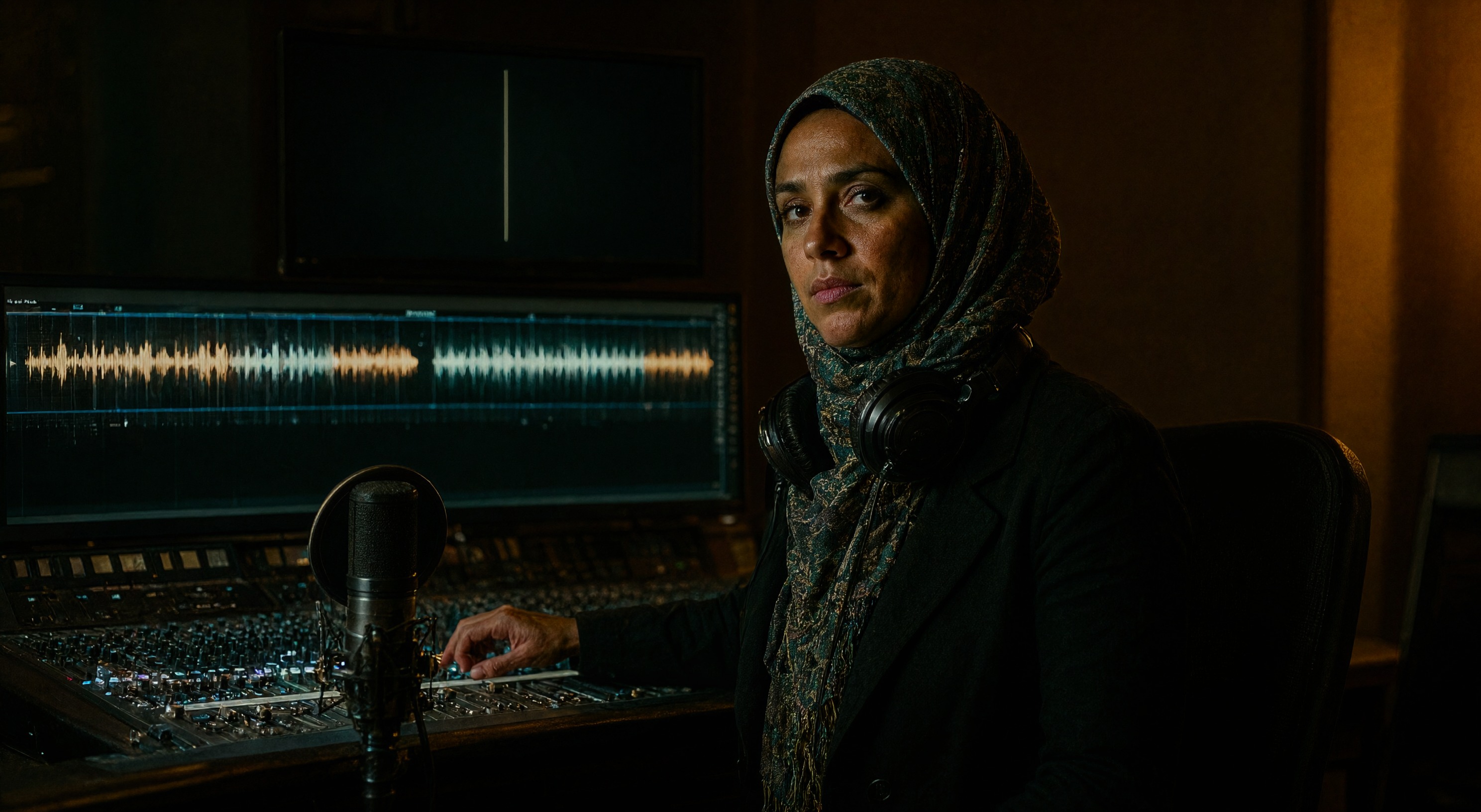
Our NCL explainer runs 3 minutes 2 seconds, 441 words, 25 recorded lines, 11 scenes, and it is live on the Memkist research page. The build order is the part worth stealing: the narration was recorded first, the timing was measured from the actual audio, and every scene lasts exactly as long as its lines plus designed pauses. The voice-over is the clock. Nothing gets re-edited to fit anything.
Why the voice is the clock
The traditional explainer workflow animates first and records narration to match, which produces the two failure modes everyone has seen. A scene that needs six seconds of speech gets four seconds of animation, so the narration either races or the editor pads it with silence. Or the animation is locked, the narration is squeezed to fit, and a sentence that read well in the script arrives in the mix sounding hurried.
Recording first inverts the dependency. The synthesizer renders each line separately, then a build step measures the real audio and writes the timing file: trims, levels, one uniform re-timing factor plus a per-line nudge. The timing comes from the waveforms, not from estimates, so a scene that runs eight seconds gets eight seconds of animation, drawn against the phrase being spoken.
One file holds the whole script
The script lives in one Python file: title, chapters, and every scene with its lines, its visual description, and its source. Wording locks to the public source of the project, the research page, never to an old internal draft. A checker runs on every build and flags any line that opens with the casual speech patterns that read fine in conversation and land terribly in narration: sentences that start with "So," "And," or "Then."
One file means one edit point. Change a line, re-record that single line, rebuild the timing, and only the affected scene re-renders. The alternative, narration spread across audio files with scene durations hardcoded beside them, turns every wording change into a cascade.
Clone the voice, line by line
The narrator is a cloned voice, built from a short reference recording. Each of the 25 lines is synthesized separately into its own file, same voice and same style every time. Line-by-line synthesis sounds slower than narrating the whole script in one take, and it buys two things a single take cannot. A take that flubs one word gets regenerated alone instead of restarting the read. And the per-line files are what the timing build consumes, so the clock and the audio never disagree about where a line ends.
The verification step catches what the waveform hides. We transcribe every take and compare it against the intended line before it enters the build, because a take can pass on the isolated line and still be unclear in the final mix.
Verify the render, not the pass flag
The render pipeline validates the timeline, renders the preview, and runs quality checks, and a green pass flag is necessary but not sufficient. The extra measurements are what caught real issues: line-onset sync measured against the timing file, every scene cut watched by eye, audio levels and black frames and freeze stretches measured with the decoder instead of assumed. Four warnings, black frames, short black at cuts, silence, and freeze, are expected for line-art-on-black and get interpreted rather than chased.
Delivery closes the loop the boring way. We rename the preview and compare it by checksum, a report records the honest limitations, nobody has listened yet, the voice went unauditioned against alternatives, loudness is unmeasured, and everything the run created that is not a deliverable gets deleted. Stills, temp cuts, and this run's synthesis takes go. Zero residue is the rule, and it is the same rule our asset-naming conventions enforce: the next agent inherits findings, not leftovers.
Build the next explainer backwards. Write the lines, record them, let the audio set every clock, and draw the visuals against the words instead of the other way around.
Sources
This is a first-hand post. Background material read during writing:
- Memkist hosts the finished NCL explainer and its research page, the public source the script wording was locked to.
The pipeline method, the timing numbers, and the verification steps are ours, documented in our production notes and running on this blog's sibling projects.